Rust edition: this page follows the live DeepWiki structure but treats the current Rust crates as implementation authority. Non-Rust surfaces are identified at their boundary and are not presented as Rust APIs.
Live Trading System
Relevant Rust source files
crates/live/src/node/mod.rscrates/live/src/node/builder.rscrates/live/src/runner.rscrates/system/src/kernel.rs
This page describes how the Rust LiveNode orchestrates live trading, manages persistence and recovery, and coordinates data and execution adapters.
For backtesting architecture, see Backtesting System. For information about individual venue integrations, see Venue Adapters. For the underlying kernel shared between live and backtest environments, see NautilusKernel and System Orchestration.
Architecture Overview
The Rust live trading system is built around LiveNode, a native orchestrator running a single-threaded tokio event loop. It drives the system through a tokio::select! loop multiplexing data events, execution events, trading commands, timers, and periodic maintenance tasks.
NautilusKernel: The core system kernel (shared with backtesting) that initializes and manages all trading engines, portfolio, cache, and message bus
Component Hierarchy (Code Entity Space)
The following diagram maps high-level system components to their specific code entities and identifies the primary communication channels.
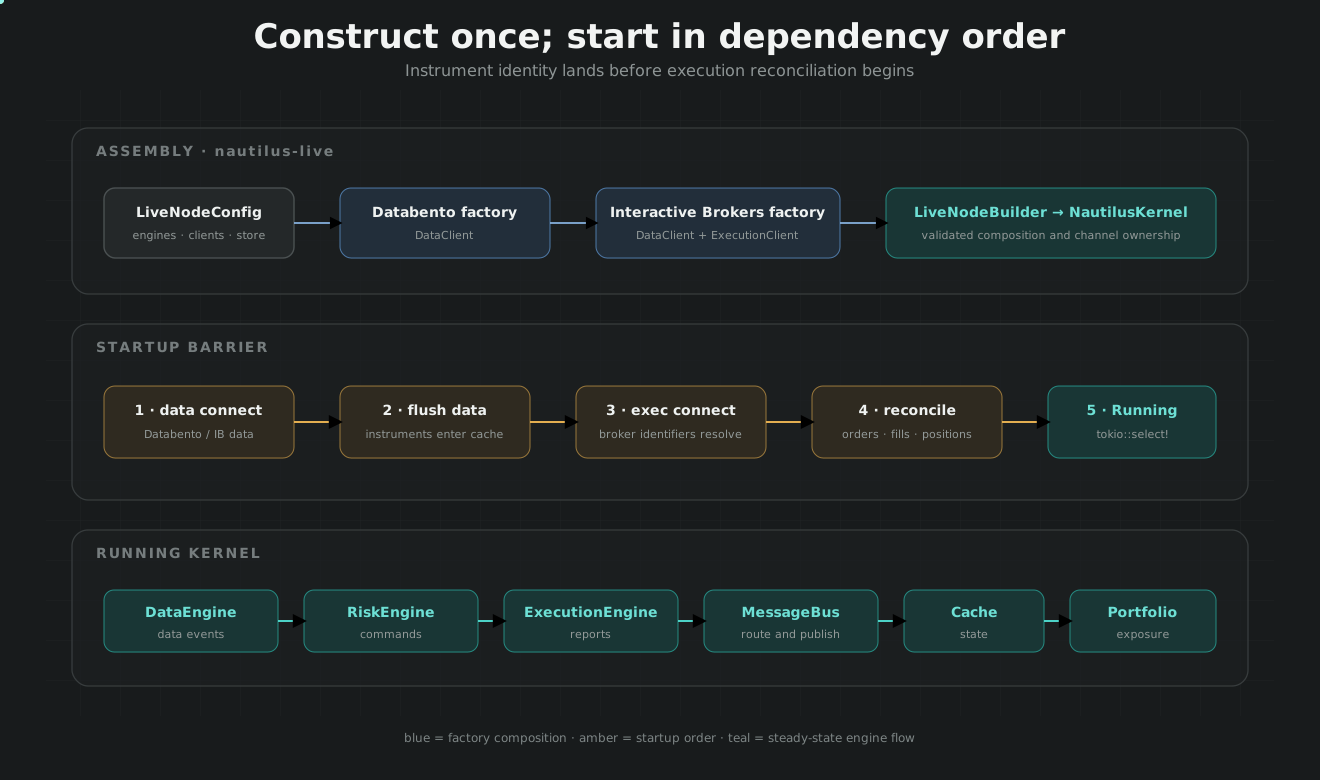
Diagram: Live Trading Component Mapping
TradingNode and LiveNode Lifecycle
The live system follows a strict sequence to ensure instruments are cached before execution clients attempt to load them.
Startup Sequencing
- Connect Data Clients: Instruments arrive as buffered
DataEvents - Flush Pending Data: Drain the channel receivers until the cache is populated via
flush_pending_data - Connect Execution Clients: Clients can now find instruments in the cache
- Reconciliation: Run the initial state alignment
Rust-Native Lifecycle (NodeState)
The LiveNode tracks its lifecycle through the NodeState enum:
| State | Discriminant | Description |
|---|---|---|
Idle |
0 | Initial state before starting |
Starting |
1 | Transitioning through connection phases |
Running |
2 | Actively processing the event loop |
ShuttingDown |
3 | Graceful stop initiated |
Stopped |
4 | Final state after cleanup |
For details, see TradingNode Architecture.
Live Engine Configuration
Live engines extend core functionality with asynchronous queue processing and specialized reconciliation logic.
LiveDataEngine: Handles asynchronous data ingestion. Configurable viaLiveDataEngineConfigwhich includesqsizeandgraceful_shutdown_on_exceptionLiveExecutionEngine: Manages the live execution lifecycle, includinginflight_check_interval_ms,reconciliationsettings, andopen_check_interval_secsLiveRiskEngine: Provides live-specific risk validation with queue management
For details, see Live Engine Configuration.
Execution Reconciliation
Execution reconciliation aligns the venue's actual order and position state with the system's internal state. This is critical for recovering from lost network messages or system restarts.
Reconciliation Flow
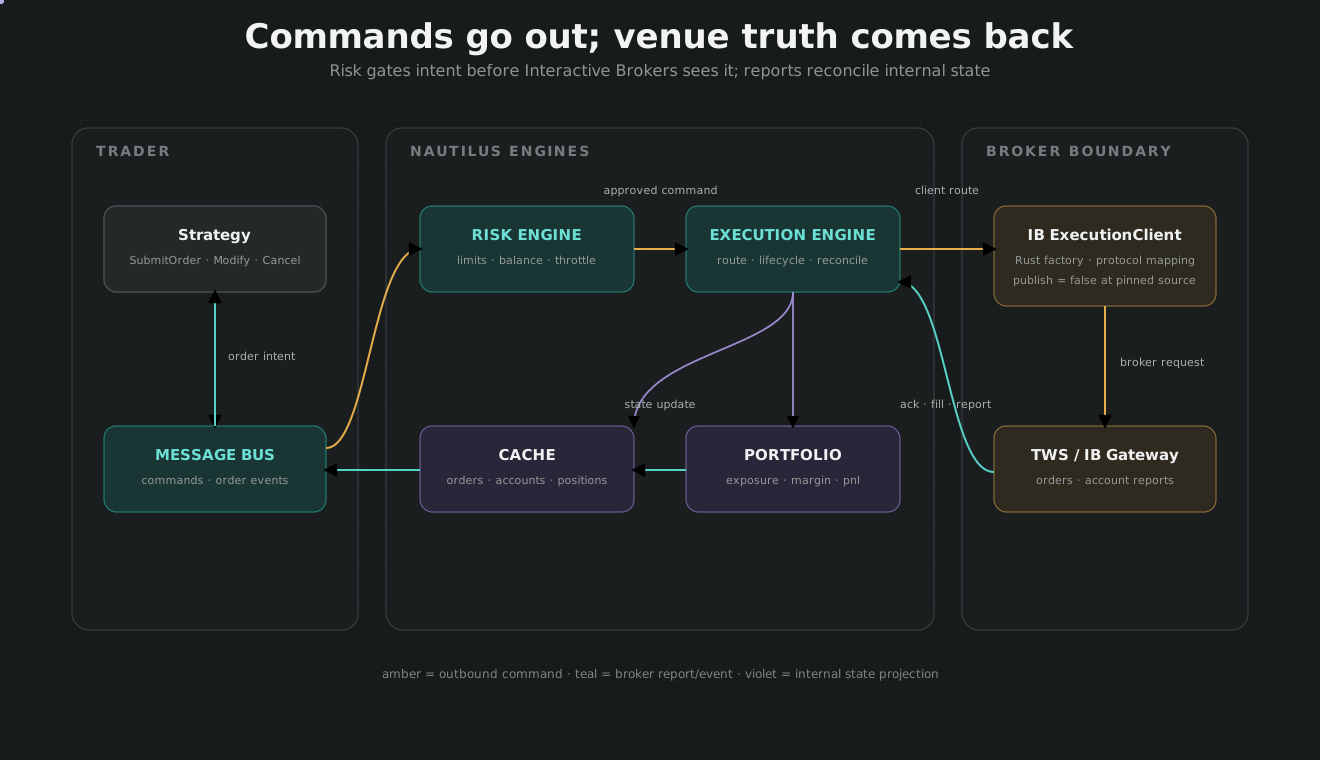
Diagram: Execution Reconciliation Procedure
Key Concepts
- In-flight Orders: Orders awaiting venue acknowledgement (
SUBMITTED,PENDING_UPDATE,PENDING_CANCEL) - Submit Outcome Policy: Adapters only emit
OrderRejectedwhen the venue proves non-acceptance; transport errors leave orders "in-flight" for reconciliation to resolve - Reconciliation Events: Rust reconciliation logic under
crates/execution/src/reconciliation/turns venue reports into typed order, fill, and position updates while preserving correlation and deduplication rules.
For details, see State Persistence and Recovery.
Client Factory Pattern
The live system utilizes a builder and factory pattern to register and build venue-specific clients and plugins.
LiveNodeBuilder: Provides a fluent interface in Rust to add strategies, execution algorithms, and data/execution clientsLiveNodeBuilder: Coordinates node assembly and registers Rust data and execution client factories.- Reconciliation Reports: All adapter execution clients follow a standard procedure, calling
generate_order_status_reports,generate_fill_reports, andgenerate_position_status_reportsto produce anExecutionMassStatus
For details, see Client Factory Pattern.