Rust edition: this page follows the live DeepWiki structure but treats the current Rust crates as implementation authority. Non-Rust surfaces are identified at their boundary and are not presented as Rust APIs.
MessageBus and Communication Patterns
Relevant Rust source files
crates/common/src/msgbus/core.rscrates/common/src/msgbus/typed_router.rscrates/common/src/msgbus/typed_endpoints.rscrates/common/src/msgbus/backing.rscrates/infrastructure/src/redis/msgbus.rs
Overview
The MessageBus is the central communication backbone of NautilusTrader, providing a decoupled messaging layer for all system components including the DataEngine, ExecutionEngine, RiskEngine, Portfolio, strategies, and actors It supports high-performance, in-memory message passing with optional Redis backing for external streaming and persistence
The system utilizes three fundamental communication patterns :
- Point-to-Point: Send messages to named endpoints via
send_*functions. - Pub/sub: Publish messages to topics via
publish_*, where subscribers receive all messages matching their pattern. - Request/Response: Register correlation IDs for response sequence tracking.
The Rust MessageBus provides in-process routing, typed endpoints, topic subscriptions, request/response correlation, and optional external ingress/egress backing.
MessageBus Architecture
The MessageBus supports typed hot paths and erased Any handlers where heterogeneous routing is required, while keeping endpoint and topic ownership explicit.
Core Routing Components
The Rust implementation at manages state using several specialized structures:
| Component | Role |
|---|---|
TopicRouter<T> |
Optimized dispatch for specific data types (Quotes, Trades, Bars) |
EndpointMap |
Registry for point-to-point command handlers |
Subscription |
Container for a Pattern, MessageHandler, and priority |
CorrelationIndex |
Maps UUID4 correlation IDs to return handlers for request/response |
System Entity Mapping
The following diagram bridges the conceptual communication flow to the specific code entities implementing the bus.
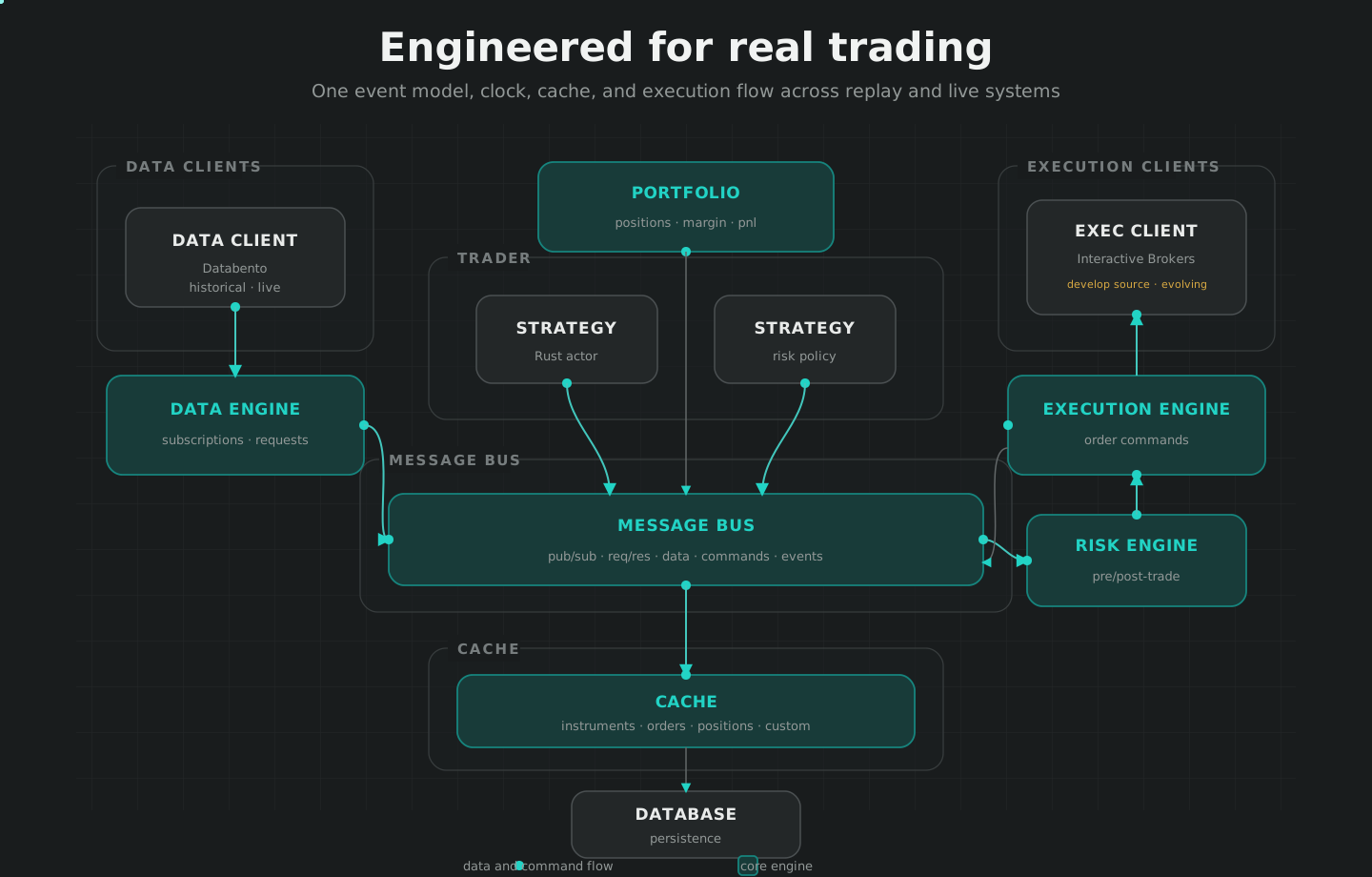
Typed topic routers carry hot market-data paths, endpoint maps deliver commands to named handlers, and the correlation index completes request/response lifecycles. All three remain in-process contracts even when an optional external backing mirrors selected messages.
Communication Patterns
Point-to-Point (Commands)
Point-to-point messaging delivers commands directly to a registered handler. Components register themselves at specific endpoints during the system initialization phase. For example, the ExecutionEngine registers endpoints to handle TradingCommand messages
Implementation Flow:
Publish/Subscribe (Events & Data)
The pub/sub pattern supports one-to-many broadcasting. Subscribers provide a Pattern which is matched against a message's Topic string
Topic Pattern Matching
NautilusTrader uses a greedy backtracking algorithm for pattern matching supporting:
*: Matches zero or more characters.?: Matches exactly one character.
| Pattern | Matches | Does Not Match |
|---|---|---|
data.quotes.* |
data.quotes.BINANCE.BTCUSDT |
data.trades.BINANCE.BTCUSDT |
*.orders.??? |
strategy_1.orders.new |
strategy_1.orders.upd |
Request/Response
Requests are tracked via a correlation_id (UUID4). When a component issues a response, the bus uses this ID to route the message back to the original requester's callback stored in the CorrelationIndex
Performance and Threading
To achieve maximum throughput and nanosecond-level precision, the bus utilizes Thread-Local Storage (TLS) Each thread in the system (e.g., the main engine thread) maintains its own bus instance and handler buffers.
- Lock-free Dispatch: TLS ensures each thread gets its own
MessageBusinstance, eliminating synchronization overhead and the need forSend/Syncimplementations - Typed vs. Any: The bus provides specialized "typed" paths for core market data (e.g.,
publish_quote). These paths avoid the overhead of runtime type checking anddyn Anydowncasting, offering significantly higher throughput - Buffering: Handler buffers use
SmallVecwith an inline capacity of 64 (HANDLER_BUFFER_CAP) to minimize heap allocations during message bursts
External Streaming via Redis
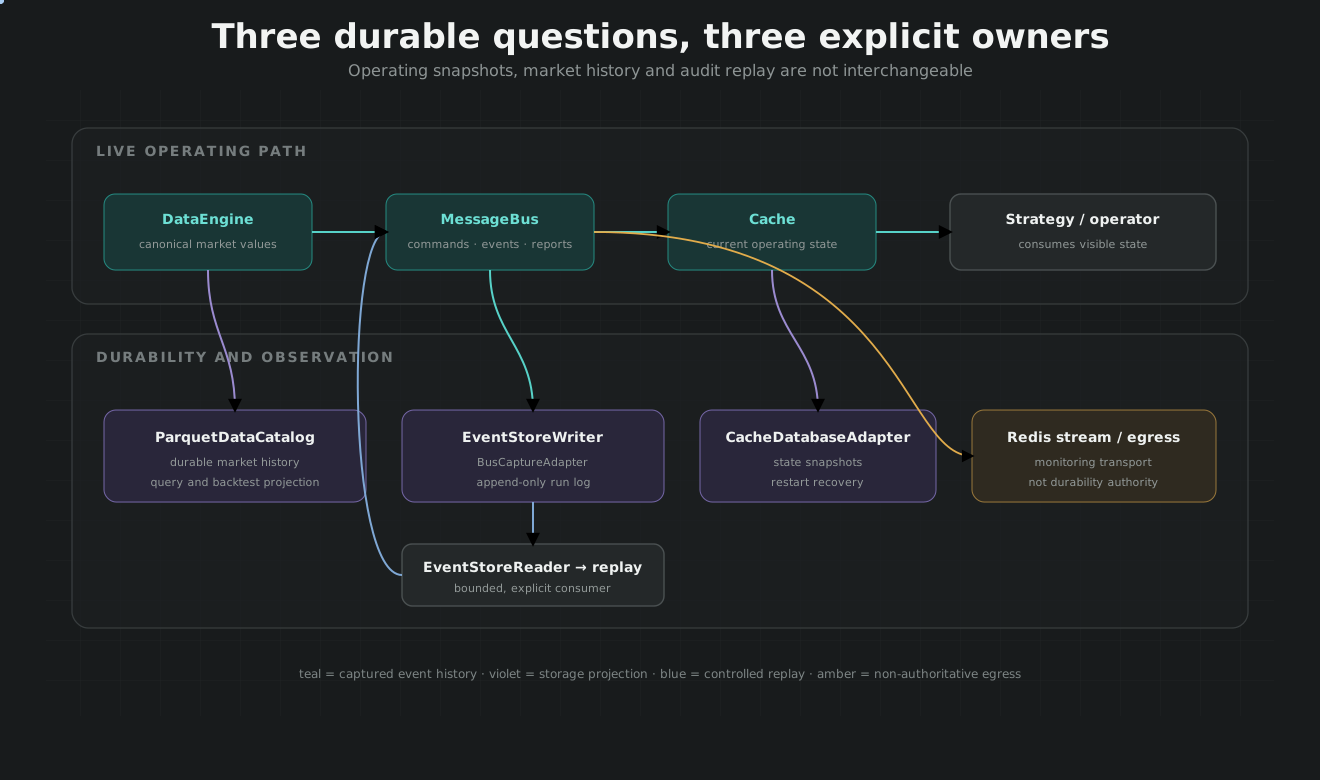
In live trading contexts, the MessageBus can mirror selected messages to Redis Streams for distributed monitoring or integration. This egress is not the authoritative cache database or event store.
Implementation Mapping:
Core Message Categories
The bus is pre-configured with optimized paths for these core NautilusTrader types :
| Category | Specific Types |
|---|---|
| Market Data | QuoteTick, TradeTick, Bar, OrderBookDeltas, OrderBookDepth10, OrderBook |
| Trading Events | OrderEventAny, PositionEvent, AccountState, PortfolioSnapshot |
| Option Data | OptionGreeks, OptionChainSlice, GreeksData |
| DeFi Data | Block, Pool, PoolSwap, PoolLiquidityUpdate, PoolFeeCollect, PoolFlash |