Rust edition: this page follows the live DeepWiki structure but treats the current Rust crates as implementation authority. Non-Rust surfaces are identified at their boundary and are not presented as Rust APIs.
Component Lifecycle and State Machine
Relevant Rust source files
crates/common/src/component.rscrates/common/src/messages/system/component.rscrates/risk/src/engine/mod.rscrates/system/src/trader.rs
Overview
NautilusTrader implements a rigorous component lifecycle management system where all components (strategies, actors, engines, clients) follow a standardized state machine. The system uses a hybrid architecture:
- Rust FSM Core: The state definitions and trigger logic are defined in Rust and exported via C headers for consistency across the hybrid boundary
- Rust component contract: The
Componenttrait and registry expose lifecycle hooks and state transitions to engines and actors. - State Validation: All state transitions are validated to prevent invalid operations, such as attempting to start a component that is already in a terminal state
Key aspects covered:
ComponentStateandComponentTriggerenumerations.- The
Componentbase class and its state management. - Two-layer lifecycle method pattern (public API + protected hooks).
- Registration and initialization pattern within the
NautilusKernel. - Component hierarchy and lifecycle coordination in
TradingNode.
Sources:
ComponentState and ComponentTrigger
ComponentState Enumeration
The Rust ComponentState enum defines the current lifecycle status of a component.
| State | Description |
|---|---|
PRE_INITIALIZED |
When a component is instantiated, but not yet ready to fulfill its specification |
READY |
When a component is able to be started |
STARTING |
When a component is executing its actions on start |
RUNNING |
When a component is operating normally and can fulfill its specification |
STOPPING |
When a component is executing its actions on stop |
STOPPED |
When a component has successfully stopped |
RESUMING |
When a component is started again after its initial start |
RESETTING |
When a component is executing its actions on reset |
DISPOSING |
When a component is executing its actions on dispose |
DISPOSED |
When a component has successfully shut down and released all resources |
FAULTED |
When a component has successfully shut down due to a detected fault |
ComponentTrigger Enumeration
The ComponentTrigger enum defines the events that cause state transitions. These triggers drive the internal logic of the component state machine
| Trigger | Initiates Transition |
|---|---|
INITIALIZE |
A trigger for the component to initialize |
START |
A trigger for the component to start |
START_COMPLETED |
A trigger when the component has successfully started |
STOP |
A trigger for the component to stop |
STOP_COMPLETED |
A trigger when the component has successfully stopped |
DISPOSE |
A trigger for the component to dispose and release resources |
Sources:
State Transition Diagram
Diagram — Component state machine with valid transitions
| Trigger family | Transitional state | Stable result |
|---|---|---|
INITIALIZE |
initialization | READY |
START / START_COMPLETED |
STARTING |
RUNNING |
STOP / STOP_COMPLETED |
STOPPING |
STOPPED |
RESUME / RESUME_COMPLETED |
RESUMING |
RUNNING |
RESET / RESET_COMPLETED |
RESETTING |
READY |
DISPOSE / DISPOSE_COMPLETED |
DISPOSING |
DISPOSED |
DEGRADE / DEGRADE_COMPLETED |
DEGRADING |
DEGRADED |
FAULT / FAULT_COMPLETED |
FAULTING |
FAULTED |
The ComponentState and ComponentTrigger enums defined in common.h provide the formal structure for this diagram
Sources:
Component Base Class Architecture
Component Class Implementation
The Rust Component trait defines the lifecycle contract, while concrete components own or receive the clock, logging identity, and message-bus handlers they require.
Diagram — Rust component structure and code entities
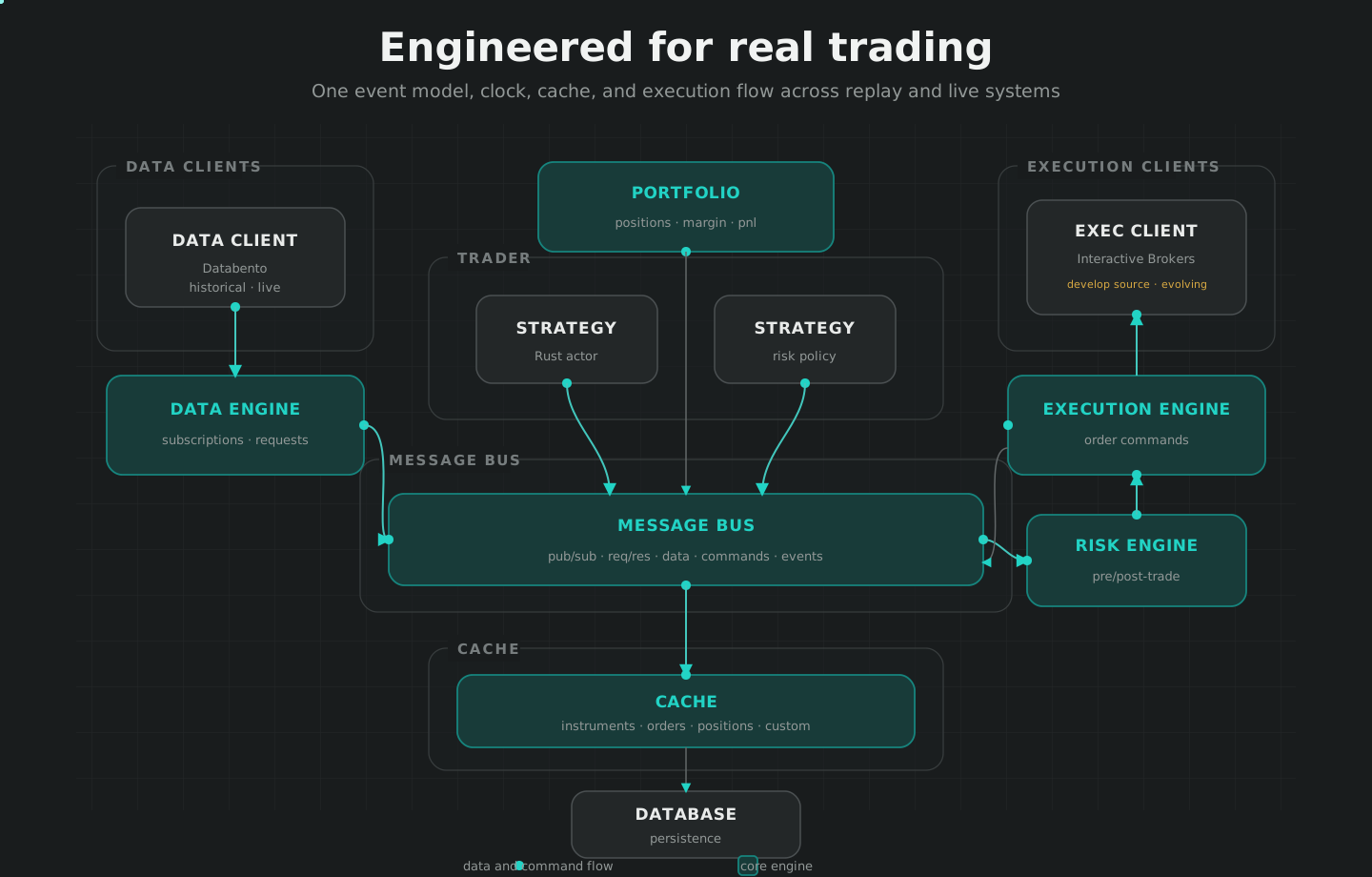
Component State Properties
The Component class uses the ComponentState enum to manage its internal status, accessible via the _fsm (Finite State Machine) instance
Sources:
Two-Layer Lifecycle Method Pattern
Components implement lifecycle behavior using a two-layer pattern that separates state management from implementation logic.
Layer 1: Public API Methods
Public methods handle state validation and transition triggers. For example, the NautilusKernel manages the startup of its constituent engines by calling their lifecycle methods during the start sequence
Layer 2: Protected Implementation Methods
Concrete Rust components implement lifecycle behavior and register message-bus handlers during initialization. RiskEngine, for example, also constructs throttlers used for order submission and modification.
| Component Type | Lifecycle Coordination |
|---|---|
NautilusKernel |
Coordinates DataEngine, ExecutionEngine, Portfolio, and RiskEngine |
TradingNode |
Orchestrates the NautilusKernel and high-level build/run phases |
RiskEngine |
Manages pre-trade risk checks and throttles trading commands |
Sources:
Component Registration and Initialization
Registration Pattern
Components are typically constructed in a PRE_INITIALIZED state. They become functional after registration with the NautilusKernel, which injects core system dependencies such as the MessageBus, Cache, and Clock
Diagram — Component initialization and kernel orchestration
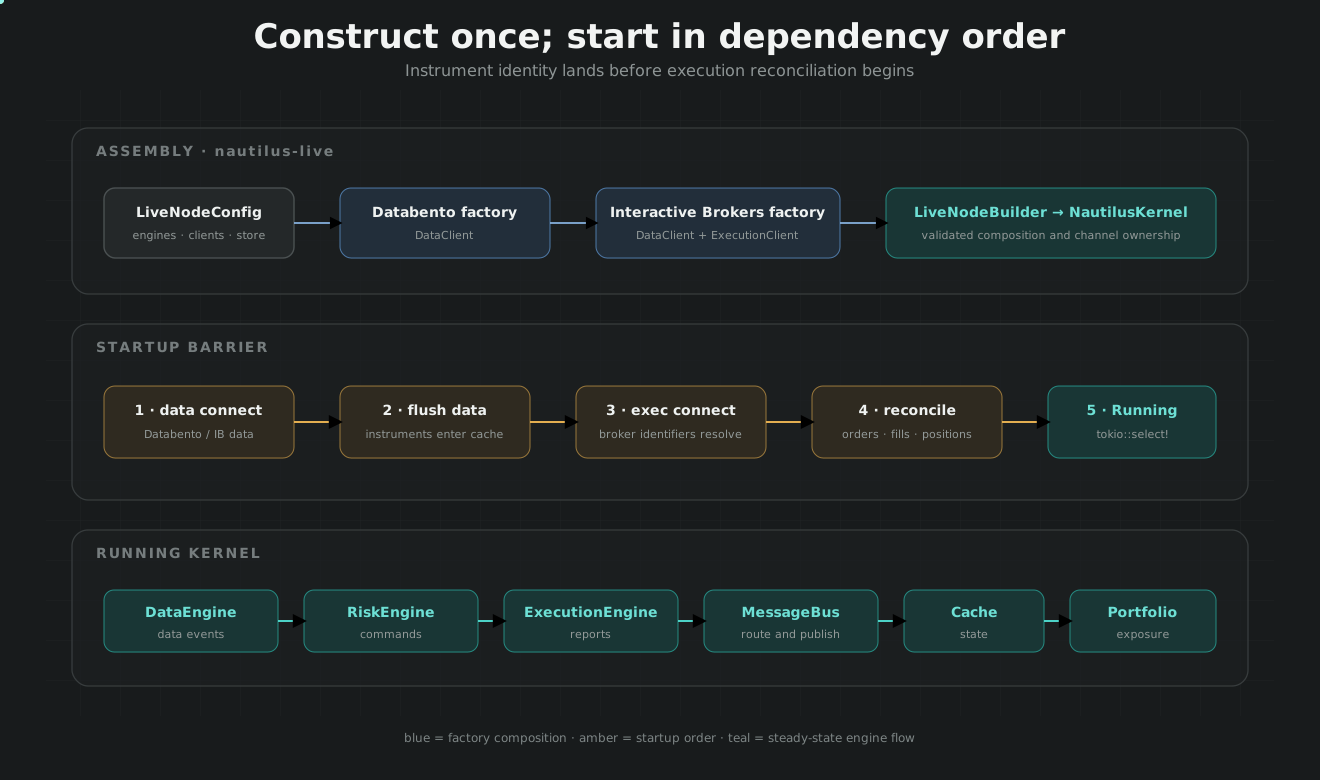
Sources:
Engine Lifecycle Coordination
LiveNode
The Rust LiveNode orchestrates startup and shutdown through NautilusKernel.
- Build Phase: Uses
LiveNodeBuilderto construct clients and register them with engines - Run Phase: The
is_running()method checks the underlying kernel state - Shutdown: Handles signals and graceful termination
NautilusKernel
The NautilusKernel serves as the central orchestration point, managing the Clock, Logger, and MessageBus for all attached engines It supports different environments (BACKTEST, SANDBOX, LIVE) and selects the appropriate clock type accordingly
RiskEngine
The Rust RiskEngine follows the component lifecycle while managing the ACTIVE, REDUCING, and HALTED trading states. Its throttlers bound message rates and protect downstream components.
Sources:
Summary
The component lifecycle system provides:
- Standardized State Management: Defined in Rust and shared via FFI for consistency
- Validated Transitions: Enforced through the
ComponentTriggerlogic - Coordinated Orchestration: Managed by the
NautilusKernelto ensure dependencies are injected before startup - Environment Awareness: The system automatically switches between
TestClockandLiveClockbased on the configuration
Sources: