Rust edition: this page follows the live DeepWiki structure but treats the current Rust crates as implementation authority. Non-Rust surfaces are identified at their boundary and are not presented as Rust APIs.
Key Features and Components
Relevant Rust source files
crates/core/src/lib.rscrates/model/src/lib.rscrates/system/src/kernel.rscrates/backtest/src/node.rscrates/live/src/node/mod.rs
This page summarizes the native Rust engine, model, data, execution, persistence, backtest, live, and selected adapter capabilities at the pinned revision.
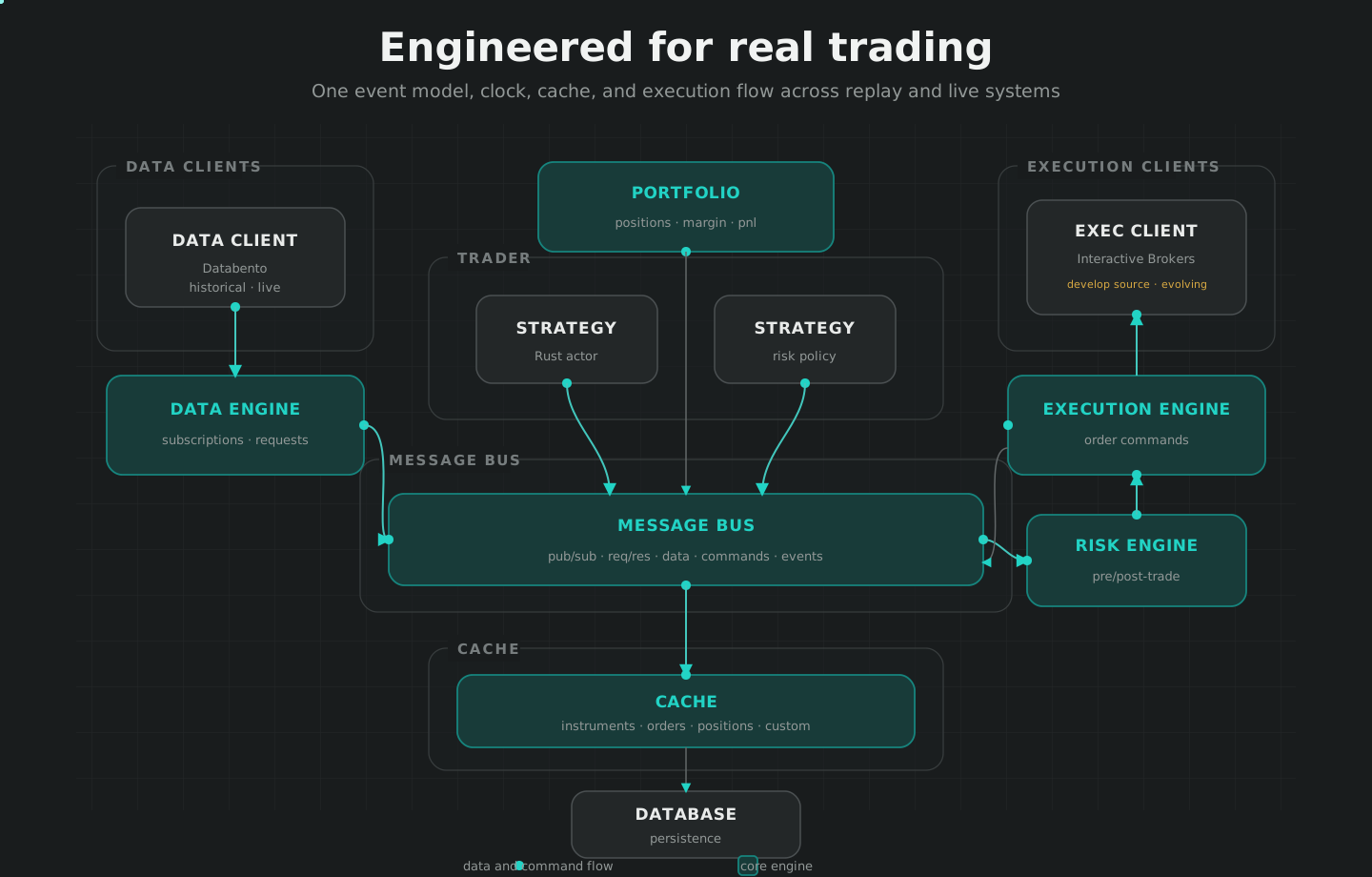
The diagram is source-qualified to the pinned Rust checkout. Interactive Brokers is marked as evolving develop source because the adapter is native Rust but not published at this revision.
Multi-Account Execution
NautilusTrader supports multi-account execution, enabling a single trading node to manage multiple accounts simultaneously across different venues. This capability is essential for institutional deployments, fund management, and strategies requiring account segregation.
Multi-Account Architecture
| Boundary | Owned value | Routing responsibility |
|---|---|---|
| Strategy | AccountId on each order command |
Selects the intended trading account explicitly |
RiskEngine |
Account balances, margin, and limits | Validates the command against account-scoped state before execution |
ExecutionEngine |
Client and account routing state | Routes approved commands to the venue client associated with the account |
| Execution client | Venue-native account reference | Translates the Nautilus account identity into the broker protocol |
Portfolio |
Account-scoped positions and PnL | Applies execution reports without merging unrelated account state |
Key Features:
- Account-Level Routing: Orders specify target
AccountIdfor precise execution control. - Independent Risk Management: Per-account balance checks, margin calculations, and risk limits are enforced by the
RiskEngine - Separate Position Tracking: Each account maintains isolated position state within the
Portfolio - Specialized Account Types: Supports
CashAccount,MarginAccount, andBettingAccount
Implementation:
Strategies submit orders with an explicit account_id. The Portfolio component handles account-scoped net exposure and balance updates, supporting PortfolioSnapshot events
Selected adapter integration
The adapter layer translates provider and broker protocols into standard Rust DataClient and ExecutionClient contracts. This edition selects only Databento and Interactive Brokers.
Supported Venues
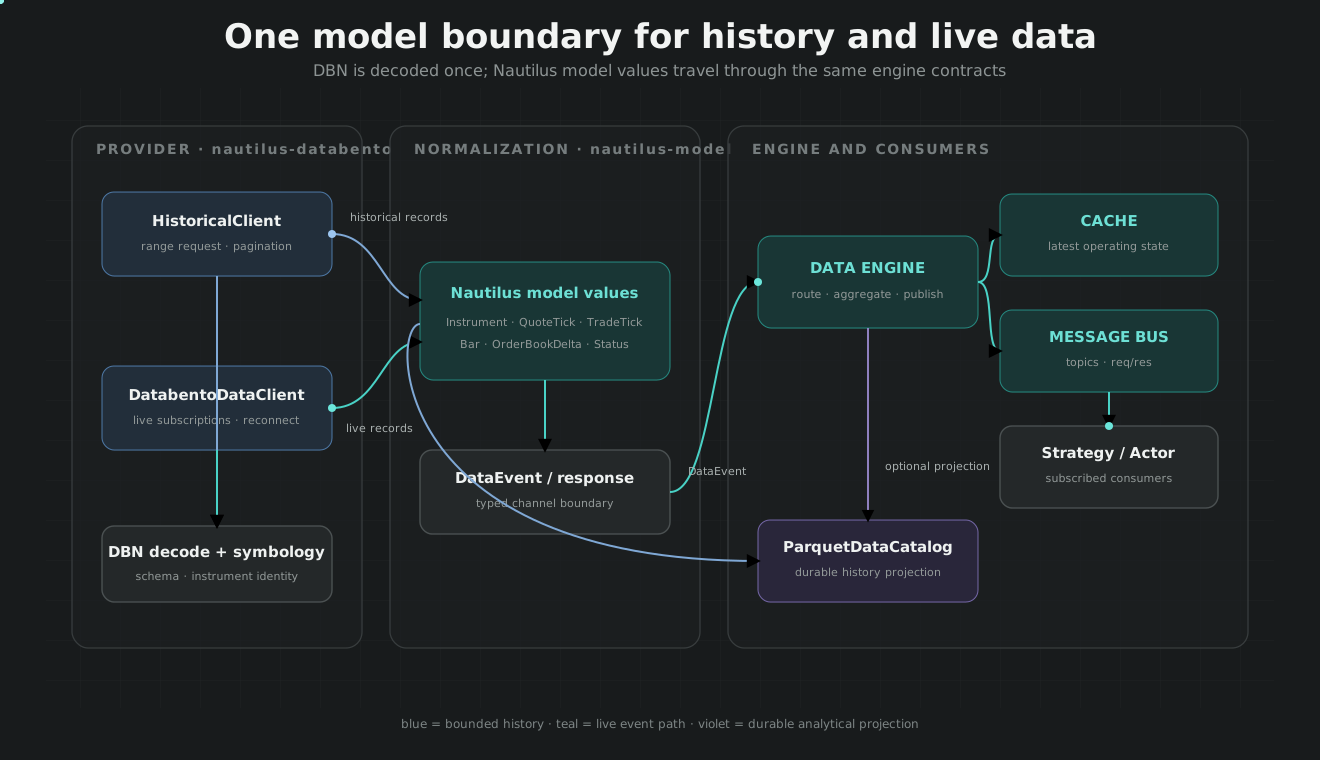
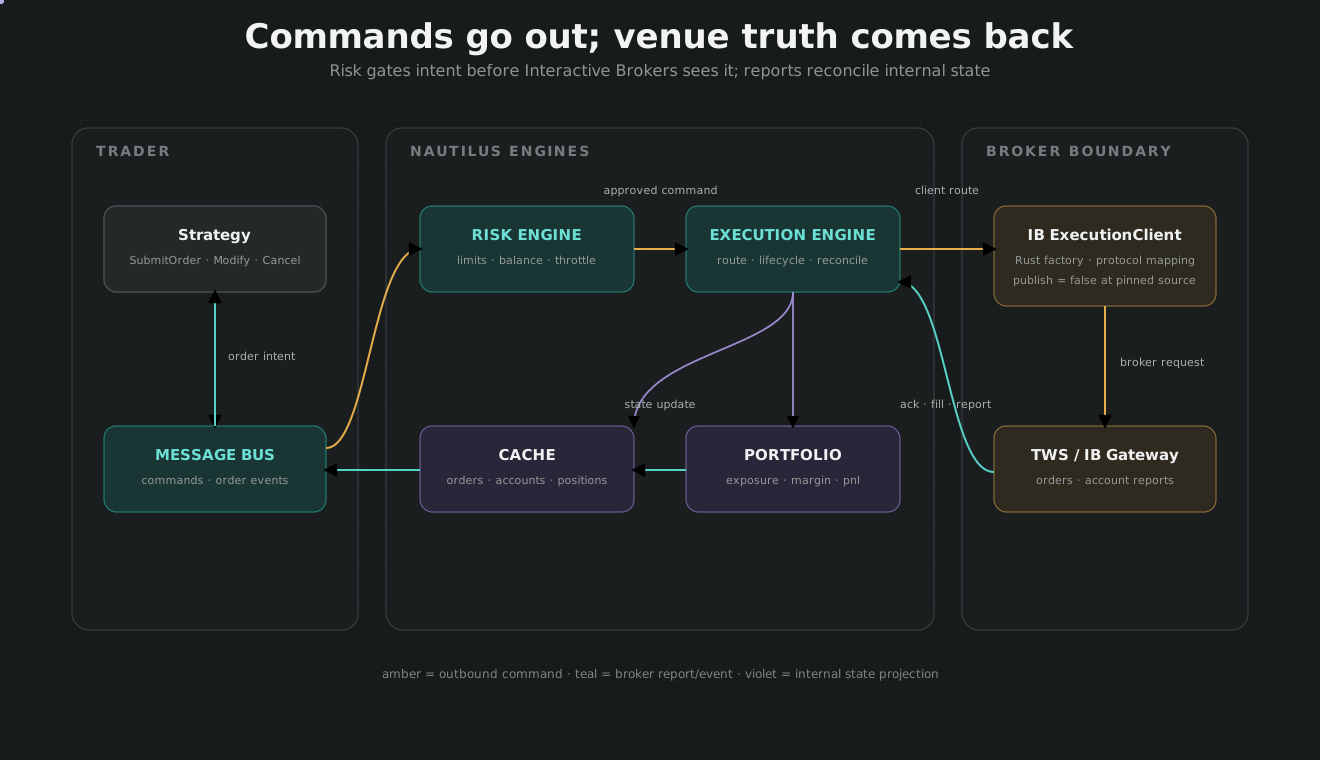
Databento supplies historical and live market data plus DBN decode and symbology. Interactive Brokers supplies live market data, execution, account reports, and reconciliation.
Databento is distributed as a published crate. The Interactive Brokers crate is native Rust but declares publish = false at the pinned revision, so it must be consumed from a compatible source checkout.
Advanced Order Management
The system supports a wide range of order types and execution instructions, operating with nanosecond precision
Execution Instructions:
post-only,reduce-only, andicebergs- Contingency Orders:
OCO(One-Cancels-Other),OTO(One-Triggers-Other), andOUO(One-Updates-Other) - Time In Force: Supports
IOC,FOK,GTC,GTD,DAY,AT_THE_OPEN, andAT_THE_CLOSE
Market Data System
NautilusTrader provides high-granularity data types, including support for granular order book updates and derivatives-specific data
Data Type Taxonomy
The canonical data taxonomy includes system events (InstrumentStatus, InstrumentClose), aggregated values (Bar, QuoteTick, TradeTick), derivatives updates (MarkPriceUpdate, IndexPriceUpdate, FundingRateUpdate, OptionGreeks), and order-book values (OrderBookDelta, OrderBookDeltas, OrderBookDepth10).
Key Data Features:
- Order Book Types: Supports
L3_MBO(Market-by-Order),L2_MBP(Market-by-Price), andL1_MBP(Best Bid/Offer) - Delta Flags: Uses
F_LASTandF_SNAPSHOTbitmasks fromRecordFlagto signal event boundaries for theDataEngine - Option Greeks: Added SBE and Cap'n Proto support for
OptionGreeks
Bar Aggregation Methods
The platform implements various aggregation methods to transform ticks into structured bars
| Method | Trigger | Category |
|---|---|---|
TICK |
Number of ticks | Threshold |
VOLUME |
Traded volume | Threshold |
VALUE |
Notional value | Threshold |
RENKO |
Fixed price movements | Threshold |
MINUTE/HOUR/DAY |
Time intervals | Time |
TICK_IMBALANCE |
Buy/sell tick imbalance | Information |
Core System Components
The architecture is built around the NautilusKernel, which orchestrates engines via a high-performance MessageBus
- ExecutionEngine: Manages order lifecycles and routes to venue-specific clients
- RiskEngine: Performs pre-trade validation including notional limits and balance checks
- DataEngine: Handles fan-in/fan-out of market data and bar aggregation
- Portfolio: Tracks balances and positions, supporting netting and hedging OMS types
- Cache: Stores instruments, orders, and positions with Redis/PostgreSQL backing
Rust crate architecture
NautilusTrader utilizes a Rust-native crate architecture for maximum performance and flexibility
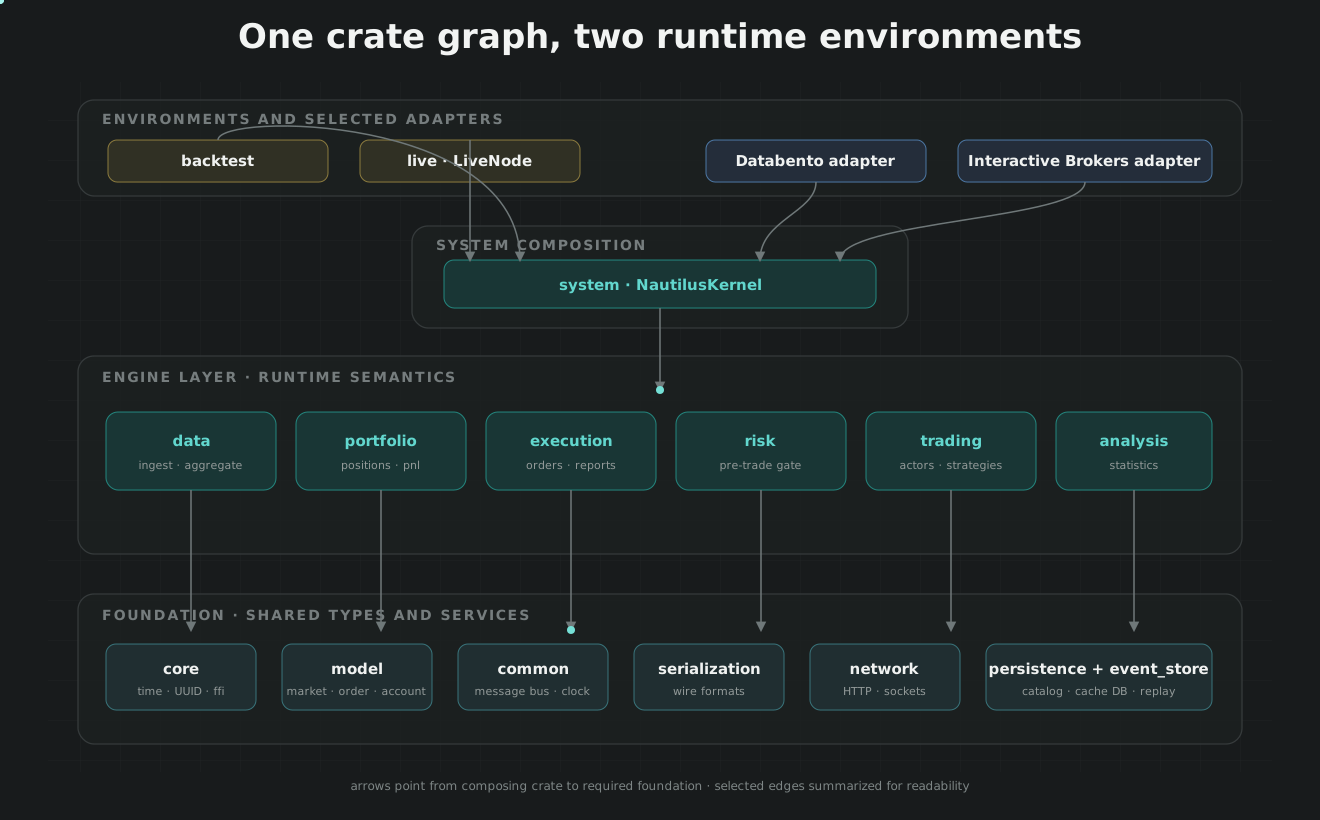
The arrows summarize compile-time composition rather than runtime message direction. nautilus-system assembles the shared engines into NautilusKernel; nautilus-backtest and nautilus-live provide different environments over that shared semantic core. The selected adapters join at live client-factory boundaries rather than redefining the model or engines.
Key Technical Details:
- Native crate composition: Engine, model, persistence, and adapter crates compose through typed Rust contracts.
- Plugin System: The
nautilus-plugincrate allows loading separately compiled Rust cdylibs at live-node startup - Precision Modes: Supports both 64-bit and 128-bit fixed-point precision for financial calculations
Backtesting and Live Trading
The system ensures research-to-live parity, allowing strategies to move from backtests to production with zero code changes
- Deterministic Time: A nanosecond resolution time model ensures identical execution semantics in simulation and live
- BacktestEngine: Optimized Rust-native backtesting engine
- LiveNode: Orchestrates live trading components, now featuring Unix SIGTERM handling in the Rust shutdown path
- Analysis: Rust analysis and portfolio components expose performance results for downstream presentation.
Testing and Quality Assurance
The codebase is protected by a rigorous CI/CD pipeline and extensive standards.
- Provenance: Release artifacts carry SLSA cryptographic attestations and Docker images are signed via
cosign - Code Quality: Enforced through rustfmt, Clippy, Cargo tests, security checks, and repository pre-commit hooks.
- MSRV: The pinned source revision requires Rust 1.97.0.