Rust edition: this page follows the live DeepWiki structure but treats the current Rust crates as implementation authority. Non-Rust surfaces are identified at their boundary and are not presented as Rust APIs.
DataEngine Architecture
Relevant Rust source files
crates/data/src/engine/mod.rs
Purpose and Scope
The DataEngine is the central data orchestrator in NautilusTrader, implementing a fan-in fan-out messaging pattern to manage interactions between multiple DataClient instances and data consumers (strategies, actors, other engines).
Core Responsibilities:
- Fan-In: Receives
DataCommandandRequestDatamessages from multiple sources via theMessageBus, routing them to appropriateDataClientinstances based on venue orclient_id - Fan-Out: Receives market data from clients via
process(), publishes toMessageBustopics where multiple subscribers (strategies, actors) consume the data - Subscription Management: Tracks active subscriptions, manages bar aggregators for internally aggregated bars, and handles order book lifecycle
- Request Coordination: Manages request/response cycles including long requests (pagination) and join requests (scatter-gather across multiple clients)
- Synthetic Instrument Support: Updates synthetic instruments from component feeds, generating synthetic quotes and trades
This page documents the engine's routing logic, subscription mechanisms, aggregation integration, and message flow patterns.
DataEngine Position in System
The DataEngine sits between data sources (via DataClient adapters) and data consumers. It is instantiated and managed by the NautilusKernel and communicates exclusively through the MessageBus.
Diagram: DataEngine Fan-In Fan-Out Architecture
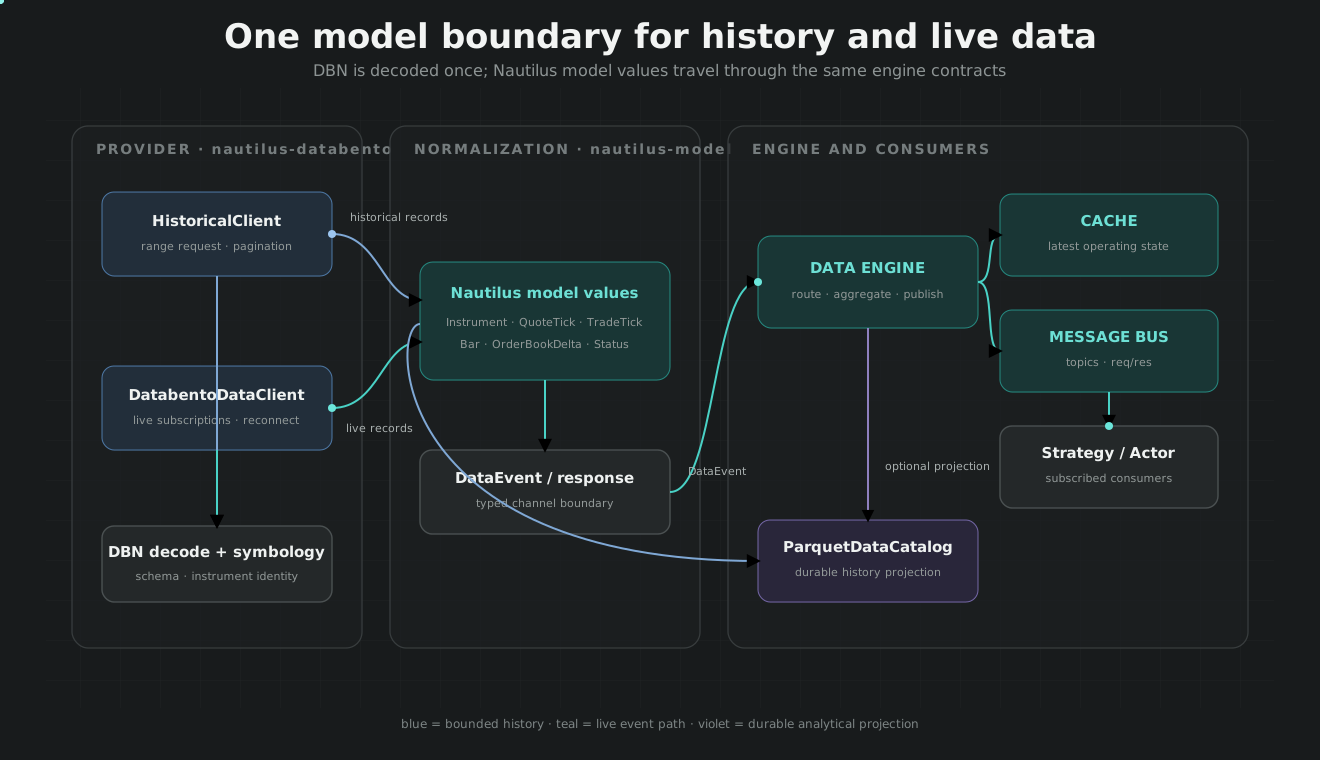
The selected provider view replaces generic exchange examples with the Rust adapter actually in scope. Client factories terminate at the standard DataClient boundary; DataEngine owns routing, aggregation, cache updates, and fan-out.
Core Component Structure
The native DataEngine is the Rust struct implemented under crates/data/src/engine/.
| Responsibility | Implementation |
|---|---|
| Client Management | _clients dict maps ClientId to DataClient, _routing_map maps Venue to DataClient |
| Subscription Routing | Routes Subscribe* commands to appropriate clients based on venue or explicit client_id |
| Data Distribution | Receives data via process(), publishes to MessageBus topics for fan-out |
| Request Handling | Manages Request* command lifecycle including long requests and join requests |
| Bar Aggregation | Manages BarAggregator instances, feeds ticks to aggregators, publishes completed bars |
| Order Book Management | Buffers OrderBookDelta, manages snapshots at intervals |
Configuration from DataEngineConfig :
time_bars_interval_type: "left" or "right" for time bar bounds.time_bars_build_with_no_updates: Build bars even with no ticks.buffer_deltas: BufferOrderBookDeltasbefore processing.emit_quotes_from_book: GenerateQuoteTicksfrom book state.
Client Registration and Routing
Client Registration
Clients are registered via register_client() :
def register_client(self, DataClient client):
    self._clients[client.id] = client
    if client.venue is None:
        self._default_client = client
    else:
        self._routing_map[client.venue] = client
Command Routing Logic
The engine uses a three-tier fallback mechanism in _execute_command() :
Diagram: Client Routing Implementation Flow
Routing uses an explicit client ID when supplied, then a venue association, then a configured default client. A missing route is an actionable failure; it is not silently redirected to an unrelated provider.
Subscription Management
Subscription Flow
Diagram: Subscription Request Processing with Code Entities
Subscription commands travel from an actor through the message bus to DataEngine, which resolves the selected client and calls its typed subscription method. Returning QuoteTick, TradeTick, bar, book, instrument, and status values then follow the live path shown above.
Request/Response Handling
Simple Request Flow
Diagram: Request-Response Cycle
Bounded historical requests: Large Rust historical queries must use the request/client facilities actually exposed by the selected provider and apply an explicit time or cursor bound. Generator pagination from another API surface is not claimed here.
Bar Aggregation System
The DataEngine creates and manages BarAggregator instances when strategies subscribe to aggregated bar types
Aggregator Types
TIME:TimeBarAggregatortriggered by timer intervalTICK:TickBarAggregatortriggered by tick count thresholdVOLUME:VolumeBarAggregatortriggered by cumulative volume
Aggregation Logic:
If bar_type.is_internally_aggregated() is true, the engine creates an aggregator and subscribes to underlying ticks/quotes to feed it The BarBuilder class provides the low-level logic for OHLCV updates
Order Book Management
Delta Buffering and Snapshots
The DataEngine can buffer OrderBookDelta updates and apply them in batch if buffer_deltas=True It also manages snapshots at regular intervals via subscribe_book_at_interval()
The Rust implementation uses BookUpdater and BookSnapshotter to handle these high-performance operations
Performance Considerations
- Topic Caching: Uses
TopicCacheto avoid repeated string formatting on hot publish paths - Counters: Tracks
command_count,data_count, andrequest_countfor operational metrics - Rust Core: High-performance implementations in
crates/data/src/engine/mod.rshandle the same logic with zero-cost abstractions - Deferred Commands: The Rust engine uses a
DeferredCommandQueueto handle subscription requests that occur within data ticks, avoiding re-entrancy issues